WILDMEAT Toolkit
Resources from the former USAID Wild Meat Collaborative Learning Group for integrated project design, monitoring and adaptive management.
Aim
The Wild Meat Toolkit for Integrated Design, Monitoring, and Adaptive Management seeks to enhance understanding of wild meat issues and foster integrated learning and engagement in this critical area.
This toolkit collects and shares insights on wild meat-related initiatives, highlighting their connections to food security, health and biodiversity. It showcases diverse cross-sectoral strategies for addressing wild meat challenges and provides indicators for assessing their effectiveness. By utilizing this interactive toolkit, USAID and its implementing partners worked to effectively apply a One Health approach in their efforts to address wild meat challenges.
The need
Wildlife is a critical component of biodiversity and ecosystem services that support human wellbeing. Many communities depend on wildlife for their livelihoods as well as for food and nutrition.
But due to overexploitation and loss of natural habitat, wildlife continues to face a dramatic decline. Additionally, unsustainable hunting and demand for wild meat increases the risk of disease-causing pathogens to make the leap to humans from other animals. When diseases spill over into human populations, they can threaten human lives, livelihoods, and food security.
Critical development goals of conserving biodiversity, achieving food security, and protecting the health of human communities requires more than siloed, sectoral efforts.
Background
To address unsustainable wild meat harvesting and use, the U.S. Agency for International Development (USAID) created and supported the USAID Wild Meat Collaborative Learning Group. Between 2021-2025, the group served as a platform for cross-sectoral learning exchanges to support evidence-based decision-making for improved programming. Colleagues from across USAID and its partner organizations brought together expertise from biodiversity conservation, food security, nutrition and public health to learn about problems and solutions to address the linked threats of unsustainable wild meat hunting and demand to wildlife and human well-being.
While USAID is no longer active, these resources live on. The toolkits developed by the group can elevate understanding of the importance of wild meat issues, foster engagement and integrated learning on these issues, and improve effectiveness in field programming addressing wild meat.
The Wild Meat Toolkit that emerged from this work compliments the WILDMEAT Indicators Toolkit, which provides guidance on ecological indicators and population monitoring, whereas the Wild Meat Integrated Project Toolkit more broadly addresses program design, monitoring, and adaptive management. Together, these resources offer a holistic framework for conservation programming.
Learning agenda
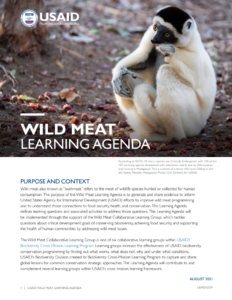
Wild meat, also known as “bushmeat,” refers to the meat of wildlife species hunted or collected for human consumption. USAID staff developed the Wild Meat Learning Agenda to generate and share evidence to inform efforts to improve wild meat programming and to understand those connections to food security, health, and conservation. The Learning Agenda defines learning questions and associated activities to address those questions.
Theory of Change
The Learning Agenda is framed around a theory of change that presents a hypothesis of expected results of wild meat programming to improve conservation and health outcomes.
USAID developed the theory of change, and its associated learning questions are a framework to help project teams plan for, learn about, and adapt their wild meat, health, and food security programming. The learning questions seek to understand the context, test the assumptions, and define and monitor key characteristics of an expected result.
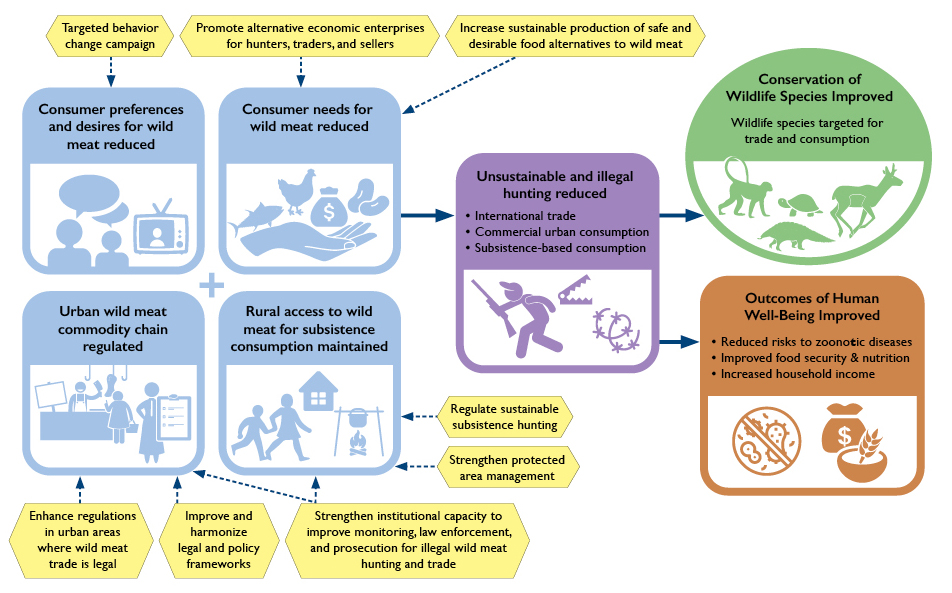
The theory of change highlights four main outcomes that project teams seek to achieve to reduce unsustainable and illegal wild meat.
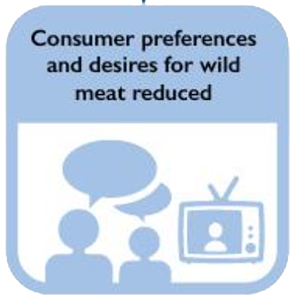
Consumer preferences and desires for wild meat reduced: The use of behavior change methodologies to reduce consumer preferences and desires for wild meat to reduce sales of wild meat products and ultimately help to mitigate unsustainable and illegal hunting of wildlife for consumption.
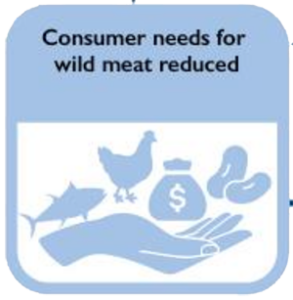
Consumer needs for wild meat reduced: The provision of alternative food and economic enterprises to reduce reliance on wild meat for food and income.
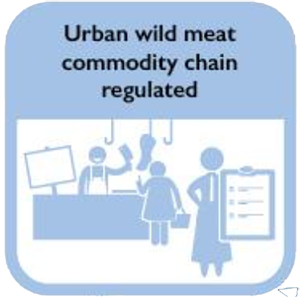
Urban wild meat commodity chain regulated: Strengthening regulations and enforcement actions to increase the risks for wildlife crimes, and therefore reduce sales of illegal wildlife products and risks to emergence of zoonotic diseases.
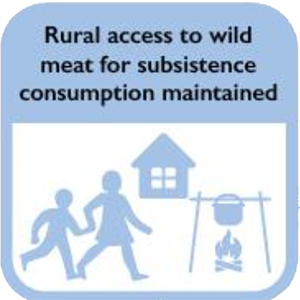
Rural access to wild meat for subsistence consumption maintained: Strengthening community management of local areas, as well as protected area management and regulating sustainable subsistence hunting to maintain local access to wild meat for subsistence consumption in rural areas.
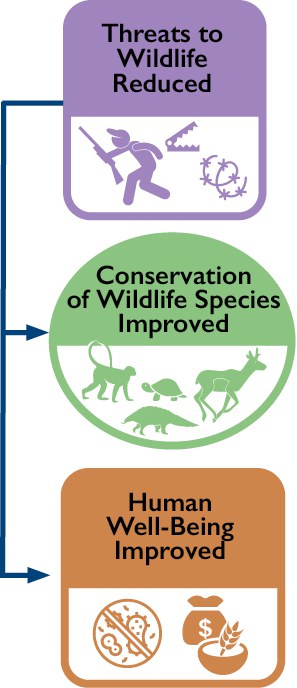
The Theory of Change suggests that IF consumer preferences, desires, and needs for wild meat are reduced, the urban wild meat commodity chain is regulated, and rural access to wild meat for subsistence consumption is maintained, THEN unsustainable and illegal hunting of wild species will be reduced. A reduction in hunting improves the viability of wildlife species and improves human well-being outcomes, including reduced risks to zoonotic diseases, improved food security and nutrition, and increased household income.
Case studies
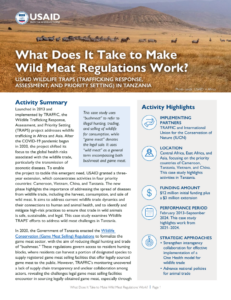
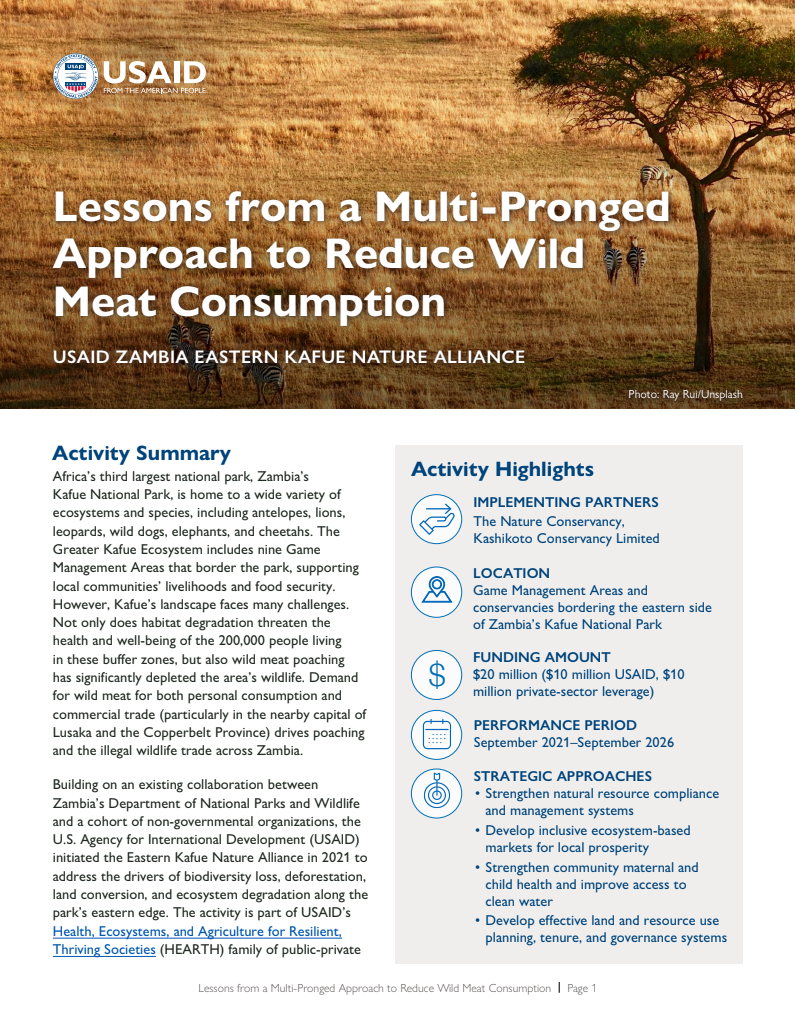
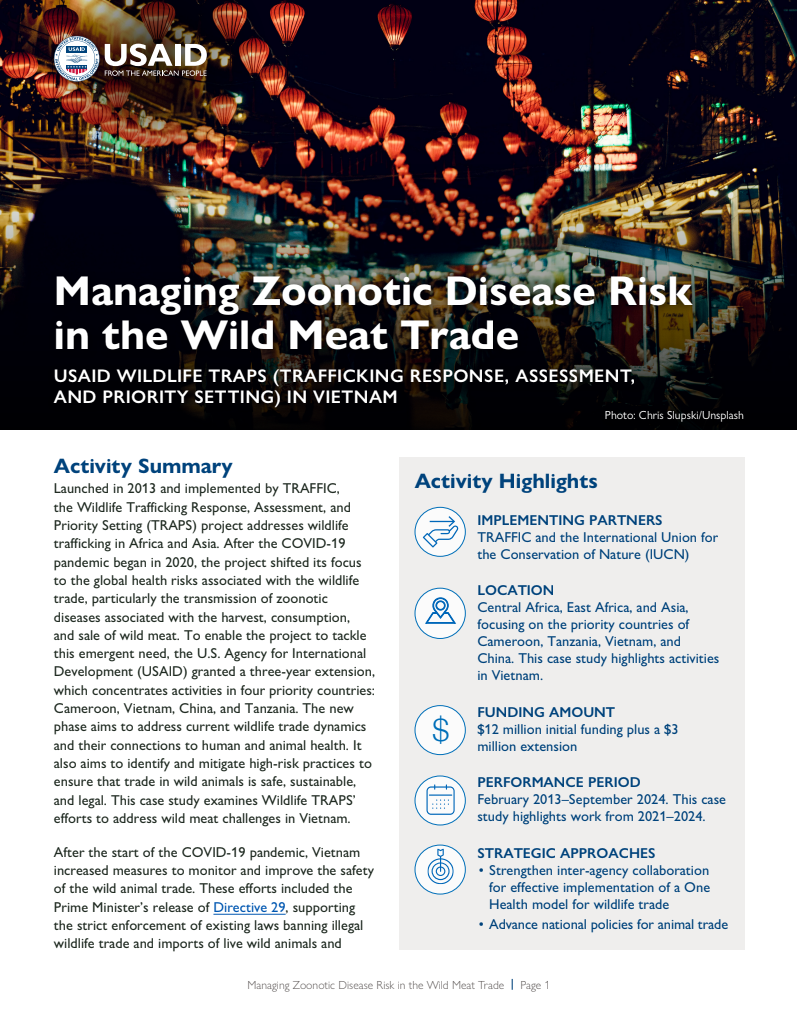
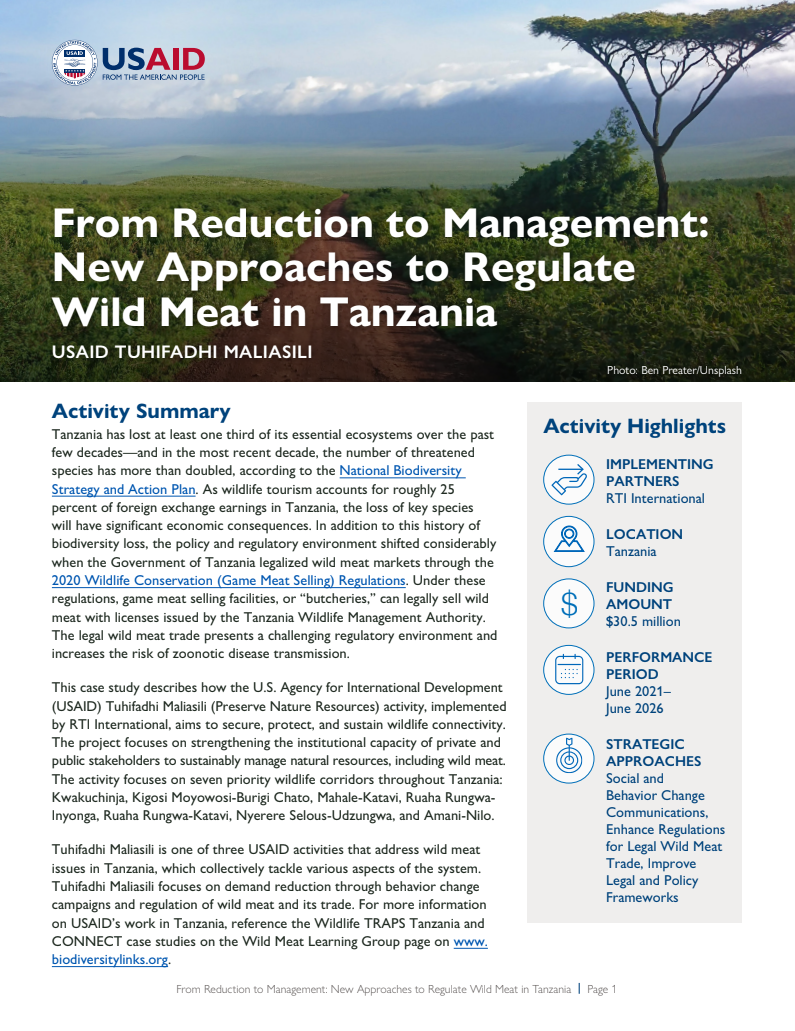
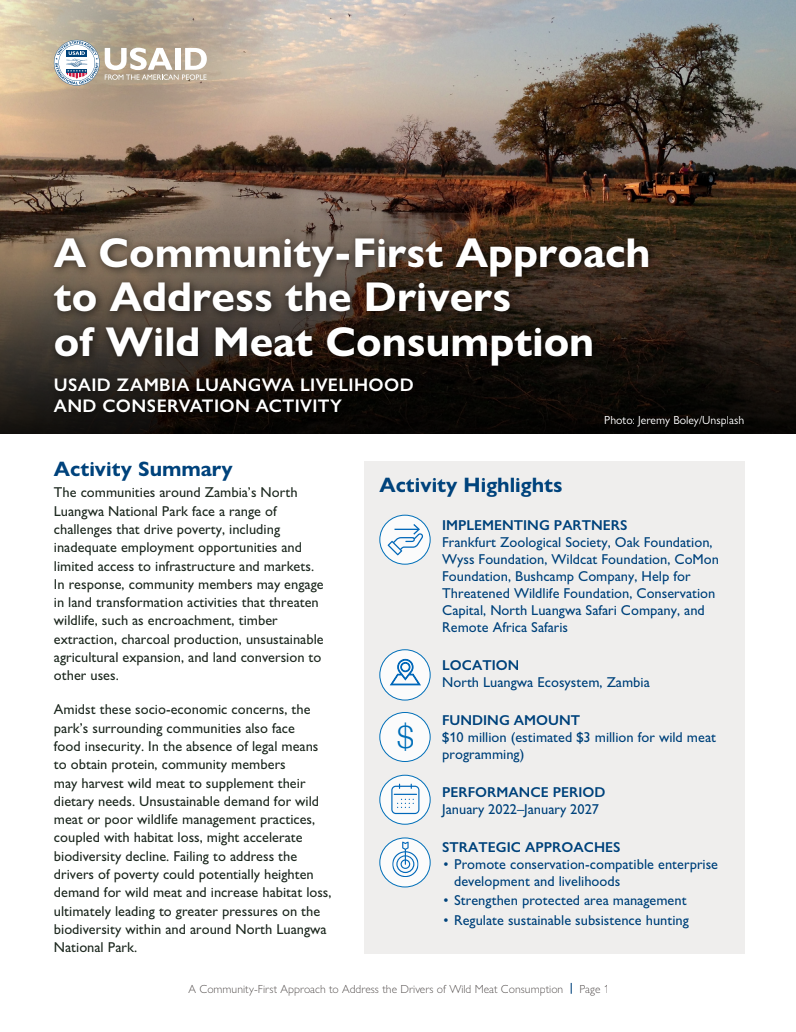
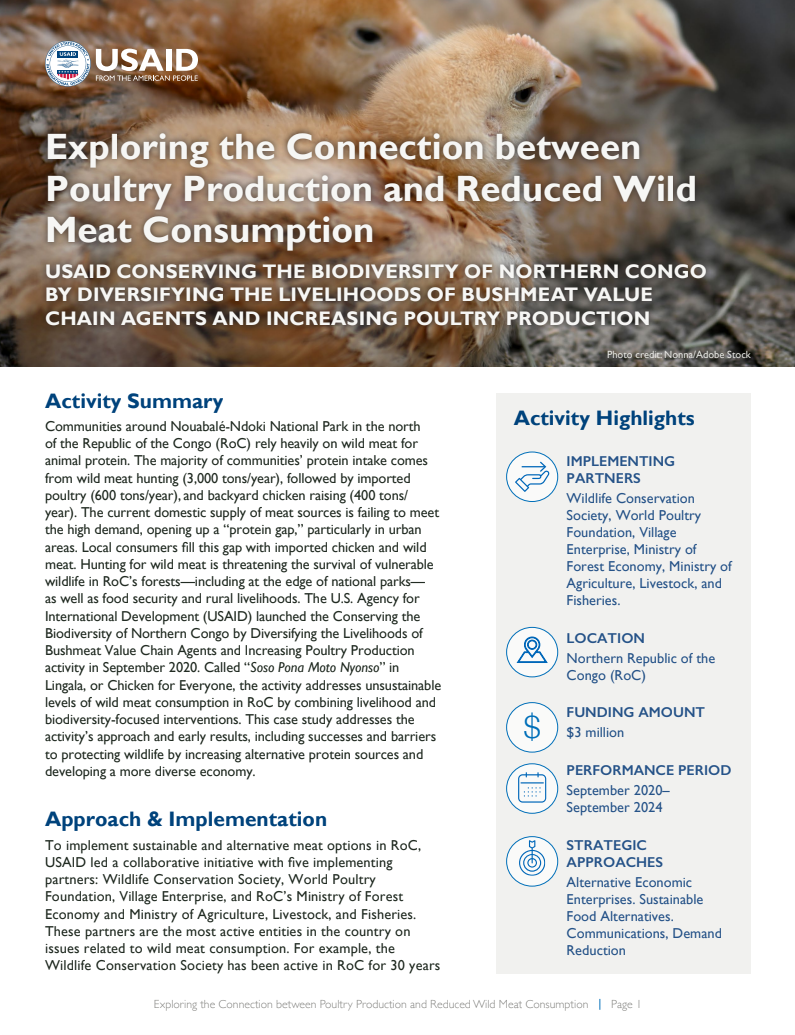
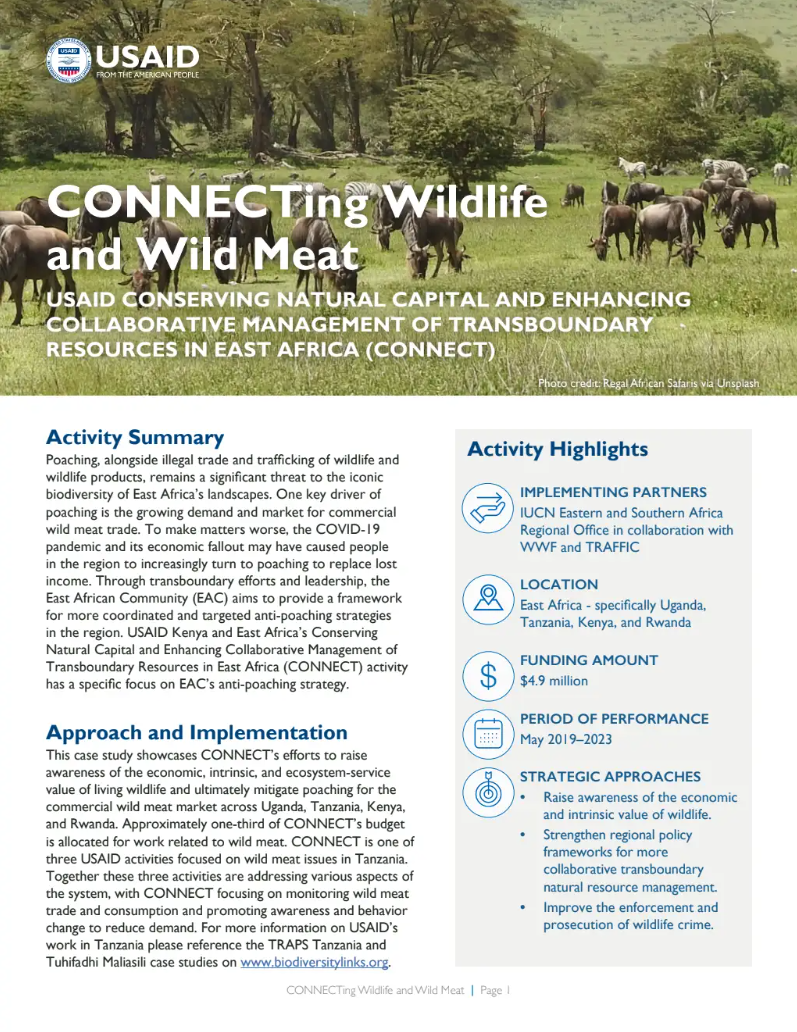
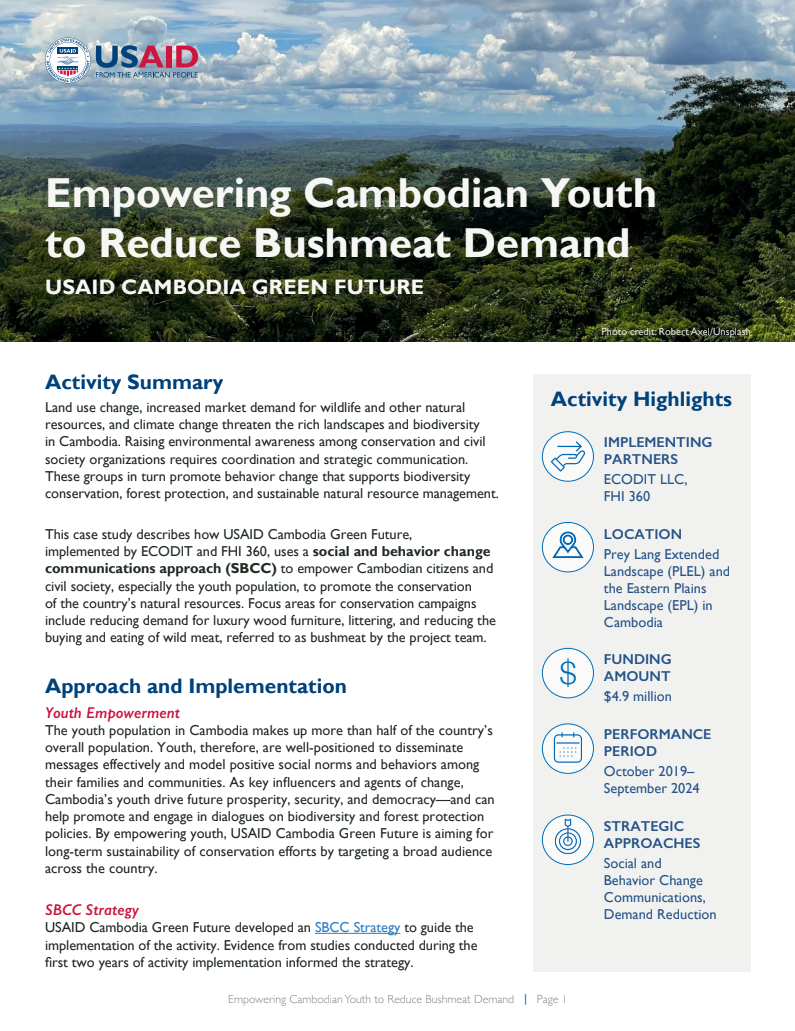
In 2022, USAID collected case studies addressing the questions posed in the Wild Meat Learning Agenda. The series looks at USAID-funded activities from around the world.
The information provided in the case-study series does not necessarily represent the views or positions of USAID or the U.S. government.
What we have learned
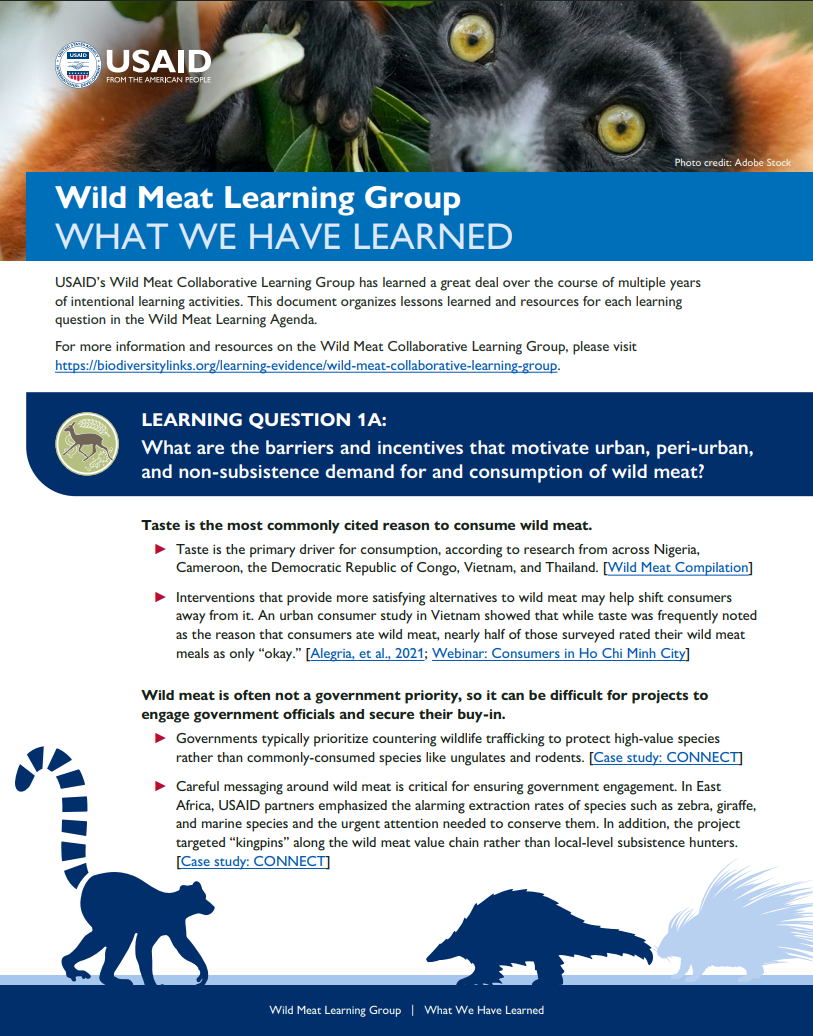
The USAID Wild Meat Collaborative Learning Group learned a great deal over many years. This document organizes the lessons learned and resources for each learning question in the Wild Meat Learning Agenda.
Learning questions and related resources
Based on the theory of change and in consultation with the Wild Meat Learning Group members, an initial set of learning questions were identified. These questions form the basis for the Learning Agenda.
Browse the questions and related resources below.
Acknowledgements
This toolkit was made possible by the generous support of the American people through the U.S. Agency for International Development (USAID) Improving Design, Evidence, and Learning (IDEAL) contract (#GS-00F-193DA Order #7200AA23M00012). The USAID Bureau for Resilience, Environment, and Food Security funds and manages IDEAL, which is implemented by Environmental Incentives, LLC with its partners Foundations of Success, NORC at the University of Chicago, and World Resources Institute.